
Conscious Commerce: Why Ethics Are Good for Business in 2025
🚀 The Rise of Conscious Commerce: Why Ethics Are Good for Business
For decades, the retail world was a simple game of price and quality. The best brands were the ones that offered the cheapest products or the most clever marketing. But in 2025, a powerful new force is reshaping the market: conscious commerce. This is a revolution where consumers are making purchasing decisions not just on a product’s features, but on its entire lifecycle—from how it was made to what the company stands for. It’s a move away from a transactional relationship to one based on shared values, transparency, and social impact. For businesses, this means that a strong ethical foundation is no longer a luxury, but a core component of success.
This blog post will explore five key principles that define the new era of conscious commerce. We’ll look at how innovative brands are winning the loyalty of a new generation of consumers by integrating ethics into every aspect of their business.
1️⃣ Radical Transparency in the Supply Chain 🔍
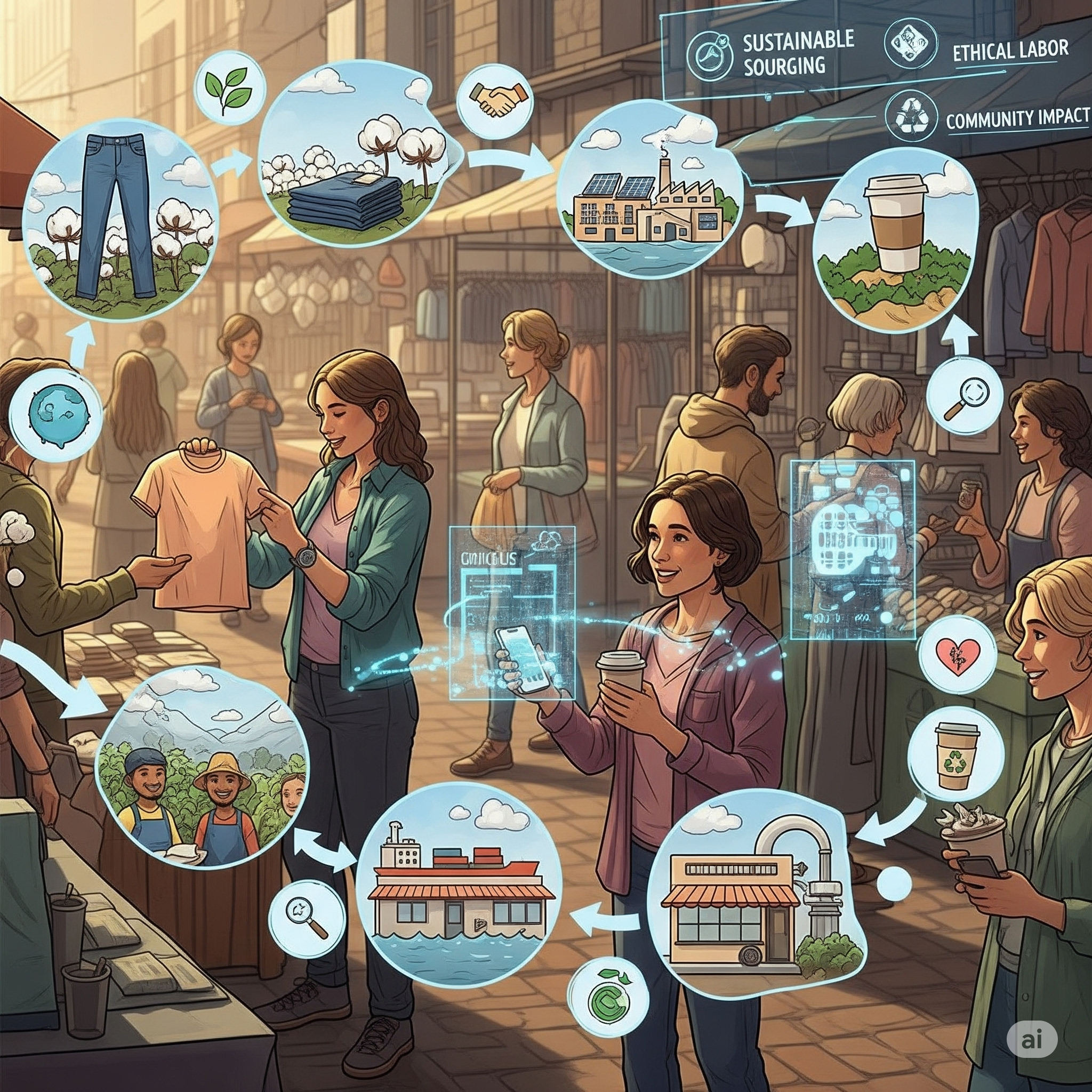
In the age of conscious commerce, customers demand to know the story behind a product. Where did the materials come from? Who made it? What were the working conditions like? Radical transparency is a direct response to this demand. Brands are now building trust by providing detailed, verifiable information about their entire supply chain, from the raw materials to the final delivery. This is often done through QR codes on packaging, which link to a webpage with a complete history of the product. This honesty builds a deep sense of trust with consumers who are tired of vague promises and hidden practices.
✅ Benefits:
- Builds Trust: Customers feel confident in buying from a brand that has nothing to hide.
- Increased Loyalty: Transparency creates a strong emotional bond with consumers.
- Reduces Risk: A transparent supply chain is easier to manage and less prone to ethical breaches.
- Differentiates Your Brand: Helps you stand out from competitors who are not transparent.
👉 How It Works: A clothing brand builds its reputation on radical transparency. A QR code on each t-shirt links to a webpage showing the farm where the cotton was grown, the factory where the t-shirt was made, the wages paid to the workers, and the carbon footprint of the entire process. This level of honesty builds a loyal following of conscious consumers. For more on this, check out patagonia.com.
2️⃣ Purpose-Driven Marketing and Brand Storytelling 🌱
The days of marketing based on a product’s features are over. In the new era of conscious commerce, a brand’s purpose-driven marketing is its most powerful tool. Consumers want to know what a company stands for and how it is making a positive impact on the world. This is not about a one-time charity campaign. It’s about a brand’s purpose being integrated into its entire story, from its marketing to its mission. For example, a coffee company with a purpose to “fight poverty” won’t just donate; it will transparently show how it pays fair wages to its farmers, invests in their communities, and supports sustainable farming practices.
✅ Benefits:
- Authentic Connection: Connects with consumers on a deeper, emotional level.
- Increased Sales: Purpose-driven brands often see a lift in sales and brand loyalty.
- Attracts Talent: Employees are drawn to companies with a strong social mission.
- Builds a Legacy: Creates a brand that is remembered for its positive impact.
👉 How It Works: A shoe company launches a campaign that tells the story of how they provide a new pair of shoes to a child in need for every pair sold. The campaign is not just an ad; it’s a powerful story about the impact the brand is making. This purpose-driven marketing resonates with conscious consumers, who feel good about their purchase and become brand advocates. For more on this, check out toms.com.
3️⃣ The Circular Economy and Sustainable Products ♻️
The conscious consumer is a powerful force driving the shift from a “linear economy” (take, make, dispose) to a “circular economy.” This means they are actively seeking out products that are designed to be reused, repaired, and recycled. Brands are responding by creating products with sustainable materials, offering take-back programs for old products, and designing products that are built to last. This trend is not only good for the planet but also a smart business strategy, as it reduces waste and appeals to a growing market of eco-conscious buyers.
✅ Benefits:
- Reduced Environmental Impact: Minimizes waste and conserves natural resources.
- Increased Customer Loyalty: Customers value brands that are committed to sustainability.
- New Revenue Streams: Take-back programs can create a market for refurbished products.
- Innovation: Drives the development of new, sustainable materials and production methods.
👉 How It Works: A furniture company launches a “take-back” program where customers can return their old furniture in exchange for a discount on a new item. The company then refurbishes the old furniture and sells it at a lower price. This circular model not only reduces waste but also creates a new revenue stream and a loyal customer base. For more on this, check out greenpeace.org.
4️⃣ Fair Labor Practices and Ethical Sourcing ⚖️
Consumers are no longer willing to turn a blind eye to unethical labor practices. They are demanding that the products they buy are made with fair labor standards and that the workers who make them are treated with dignity and respect. This has led to a rise in certifications like “Fair Trade” and “B Corp,” which verify a company’s commitment to ethical labor. For businesses, this means auditing their supply chain, paying fair wages, and creating a safe and healthy work environment. This is a crucial area where a brand’s purpose must be backed by concrete actions.
✅ Benefits:
- Increased Brand Reputation: Builds a reputation as an ethical and trustworthy brand.
- Attracts Talent: Employees are drawn to companies with a strong commitment to ethics.
- Improved Product Quality: Fair labor practices often lead to higher quality products.
- Increased Consumer Trust: Customers are more likely to trust a brand that treats its workers fairly.
👉 How It Works: A coffee company gets “Fair Trade” certified. The certification proves that the farmers who grew the coffee beans were paid a fair wage and that the farming practices were sustainable. The company uses this certification in its marketing, which resonates with conscious consumers who are willing to pay a premium for a product they know was made ethically. For more on this, check out www.fairtradeamerica.org
5️⃣ The Demand for Social Justice and Activism ✊
In 2025, consumers expect the brands they support to take a clear stand on social issues. From advocating for gender equality and racial justice to supporting LGBTQ+ rights, brands are now being judged by their silence as much as by their actions. This is a direct result of a younger generation that sees social issues as deeply intertwined with their daily lives. Businesses that are silent on these issues risk being seen as out of touch, while those that take a clear, authentic stand are rewarded with the loyalty of a new generation of buyers.
✅ Benefits:
- Increased Brand Relevance: Stay relevant by engaging with the issues that matter to your audience.
- Builds a Community: Creates a sense of belonging and community around shared values.
- Attracts Mission-Driven Talent: Appeals to employees who want to work for a company with a strong social mission.
- Fosters Positive Change: Your business can become a vehicle for social good.
👉 How It Works: A major beauty brand, known for its inclusive product line, launches a campaign that not only celebrates diversity but also donates a portion of its profits to an organization that fights for racial justice. The company’s CEO speaks publicly about the brand’s commitment, and the company’s employees are given paid time off to volunteer for the cause. This holistic commitment is rewarded with increased sales and customer loyalty. For more on this, check out www.benjerry.com.
🌟 Why Conscious Commerce is the Future of Business
Conscious commerce is not a passing fad; it’s a fundamental shift in the relationship between businesses and their customers. It’s an active acknowledgment that every dollar spent has a direct impact on the world. By integrating purpose, transparency, and ethics into your core business model, you are not only making a positive impact on the world but also building a stronger, more resilient, and more profitable business for the long term.
📌 Conclusion
The era of a purely transactional relationship with customers is over. The future belongs to businesses that understand that their purpose is their greatest asset. By building your brand on a foundation of authentic values, you can connect with a new generation of consumers and build a legacy that goes far beyond the bottom line.
👉 Explore more business and tech guides at yourspotlight.in